

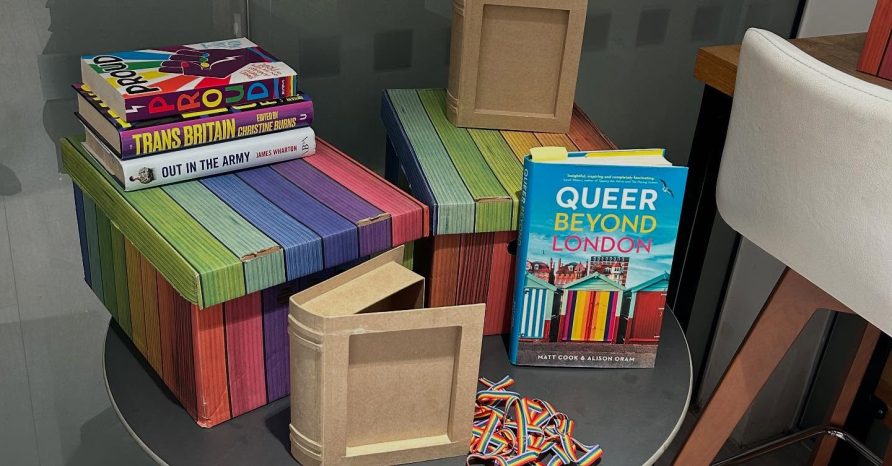


February is LGBTQ+ History month so we’re very excited to feature and LGBTQ+ Archive group this month. We spoke to Donna Maughan, one of the directors of Pride in Plymouth and asked her to tell us a bit about their work.
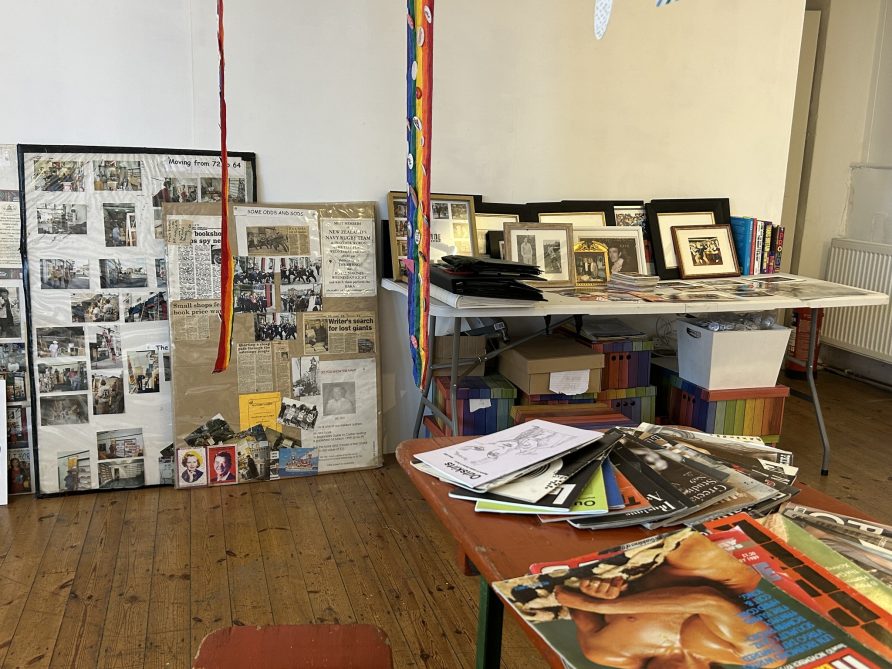
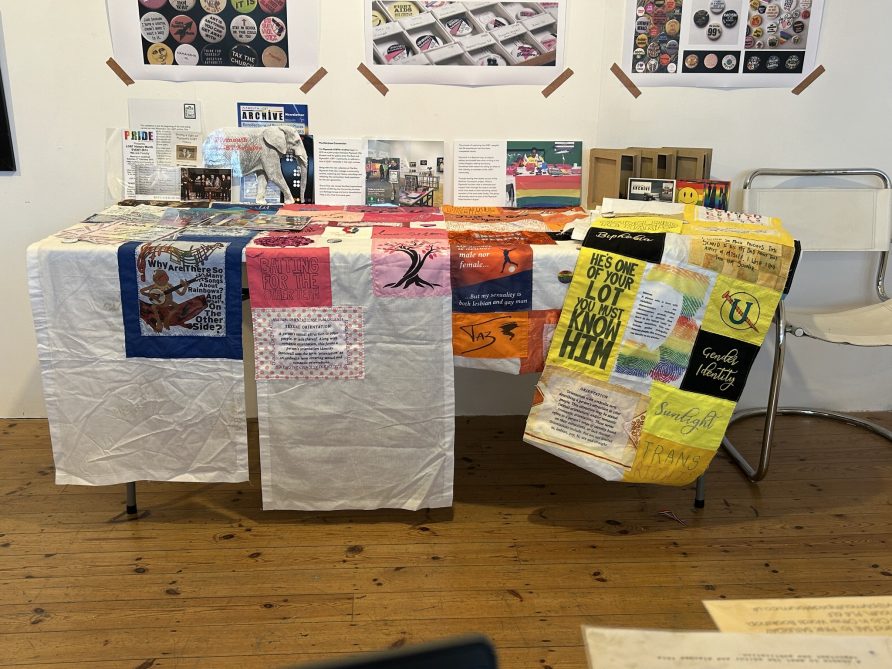
Pride in Plymouth CIC stewards a community-led LGBTQ+ archive dedicated to preserving, interpreting, and activating the histories of LGBTQ+ people in Plymouth and the wider South West. It’s been developed through participatory collecting, so the archive works directly with community members to record oral histories, safeguard personal papers, photographs, ephemera etc and then documents local activism, culture and everyday life that has often been absent from the more formal records.
As well as preservation, the archive functions as a platform for advocacy and change. We use our body of material to inform local policy conversations, support equality initiatives, and strengthen the visibility of LGBTQ+ communities within the city’s heritage. Contributors are not simply subjects of collection but often become active partners in shaping how their histories are preserved, interpreted, and used.
The archive also underpins ongoing research and learning. Its collections support academic study, student projects, and independent researchers, while informing exhibitions, public programmes, and community education activity. In doing so, the archive connects heritage practice with contemporary wellbeing, identity, and social inclusion agendas, demonstrating how community archives can contribute both to historical understanding and present-day social impact.
We keep this going through volunteer involvement and partnership working and are looking to build a lasting, accessible resource rooted in community ownership, ethical practice, and public benefit, ensuring LGBTQ+ histories are not only preserved, but actively used to inform scholarship, empower communities, and advocate for a more inclusive future.
We asked Donna about the communities she works with and how Pride in Plymouth engages with them?
Our approach is grounded in participatory heritage practice. Community members actively shape the archive by sharing oral histories, contributing or loaning personal materials, attending memory-sharing sessions, and advising on how collections are described and interpreted. This ensures the archive reflects peoples lived experience rather than external narratives, strengthening trust and long-term involvement.
Engagement takes place through workshops, public events, exhibitions, and collaborative projects that provide accessible entry points for participation. We also work closely with local organisations, researchers, and educators to widen access and ensure the archive supports both community priorities and learning opportunities. Volunteers are central to this work, helping to collect stories, document materials, and promote the archive, building skills while reinforcing community ownership. The archive also provides evidence for advocacy and supports academic and community research, ensuring collected histories inform both scholarship and local decision-making.
Through these relationships, we can ensure the archive is created with LGBTQ+ communities rather than about them. This collaborative model strengthens visibility, wellbeing, and intergenerational connection, while safeguarding histories that might otherwise be lost and embedding them within Plymouth’s shared heritage.
We asked Donna how she feels the work has contributed to preserving community heritage and/or broadened the appeal of community archives to a wider group of people?
I feel we’ve contributed to preserving community heritage by actively safeguarding LGBTQ+ histories in Plymouth that have been otherwise absent from more formal archives.
The hope is our work has broadened the appeal of community archives by making participation accessible and meaningful to people who may not traditionally see archives as relevant to them. By connecting heritage with contemporary community life, we can demonstrate that archives are not just boxes on a shelf but living resources shaped by the people they represent.
Partnership working with local organisations, educators, and researchers extends our reach and enables the archive to support learning, academic study, and public programming while reaching new audiences. Volunteers are central to this process, helping to collect, interpret, and promote materials, building skills and strengthening local stewardship.
Through preserving overlooked histories and presenting them in inclusive, community-centred ways, we’re trying to redefine what an archive can be: a shared space for memory, research, advocacy, and belonging that invites wider participation and ensures LGBTQ+ heritage remains visible within Plymouth’s story.
We asked for examples of running activities that have beneficial impacts on the physical, mental and social wellbeing of individuals and communities?
I feel we run quite a range of archive-centred activities that support the physical, mental, and social wellbeing for individuals and communities. Oral history sessions and memory-sharing workshops provide tangible opportunities for people to reflect on their experiences in supportive settings which seems to give people confidence, validating their identity, and reducing feelings of isolation they may be experiencing. For many contributors, the act of recording and preserving their story seems to be affirming and restorative, particularly where past experiences have been marginalised or overlooked.
We asked Donna what she thought made Pride in Plymouth special?
I always feel our work is distinctive because it combines more than a decade of grassroots LGBTQ+ community activity with a long-term commitment to safeguarding heritage and using it actively to support wellbeing, learning, and social change. Our archive has grown through years of events, advocacy, and volunteer-led initiatives, allowing us to collect histories that might otherwise remain hidden or be lost.
I think we also connect heritage preservation with lived community benefit. Rather than treating the archive as a passive repository, we use it as the foundation for ongoing engagement, advocacy, and education. We’re using this approach currently to develop a small, accessible community museum space, designed to bring LGBTQ+ histories into the public realm in ways that are welcoming, locally rooted, and shaped by the community itself. This micro museum will provide a permanent, visible home for collections while creating new opportunities for exhibitions, learning, and intergenerational connection.
We’re also informing academic research by exploring the relationship between LGBTQ+ heritage engagement and health and well-being. By collaborating with doctoral research in this area, we are helping demonstrate how community archives can contribute not only to historical preservation but to measurable social impact. This work is highlighting the need for participatory heritage to be a tool for inclusion, resilience, and community health.
We keep evolving while ensuring we stay firmly rooted in the community we serve.