
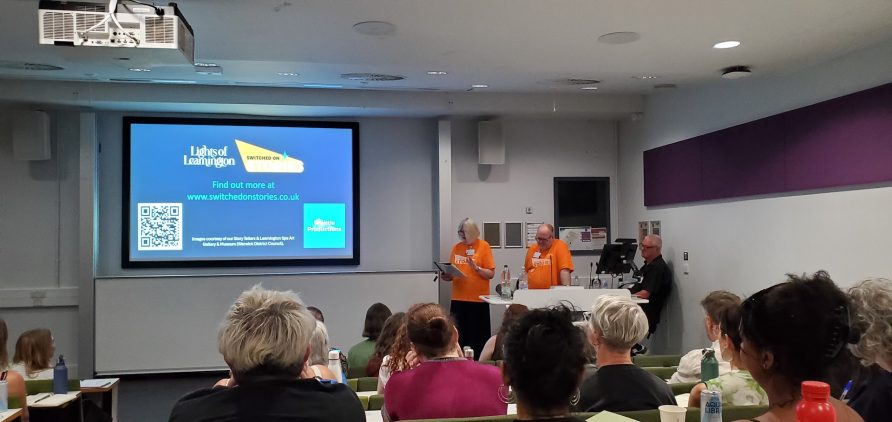
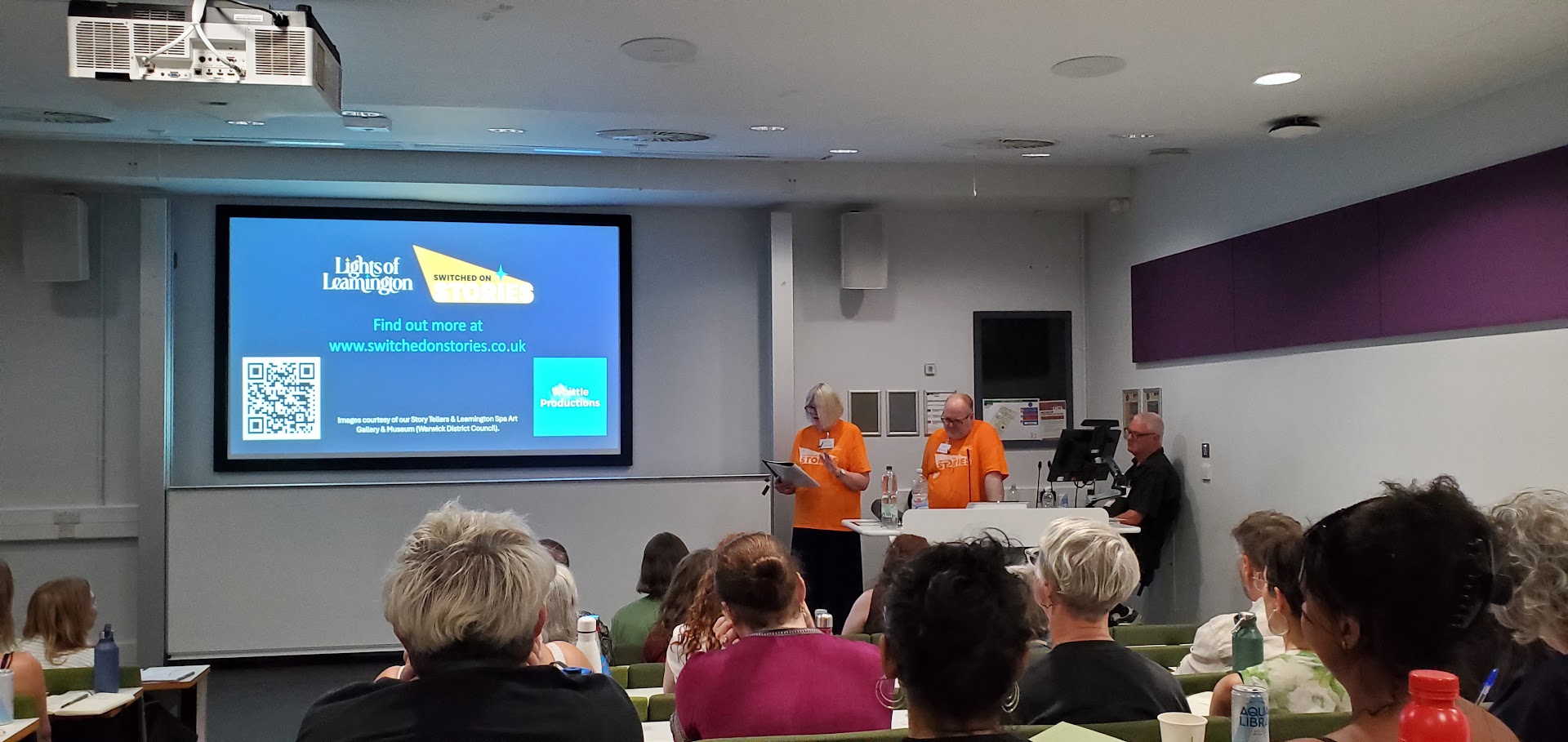
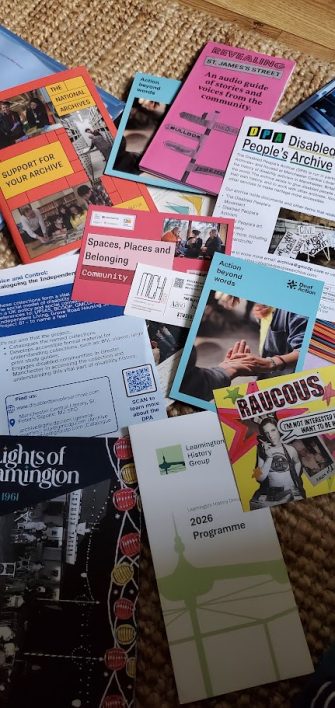
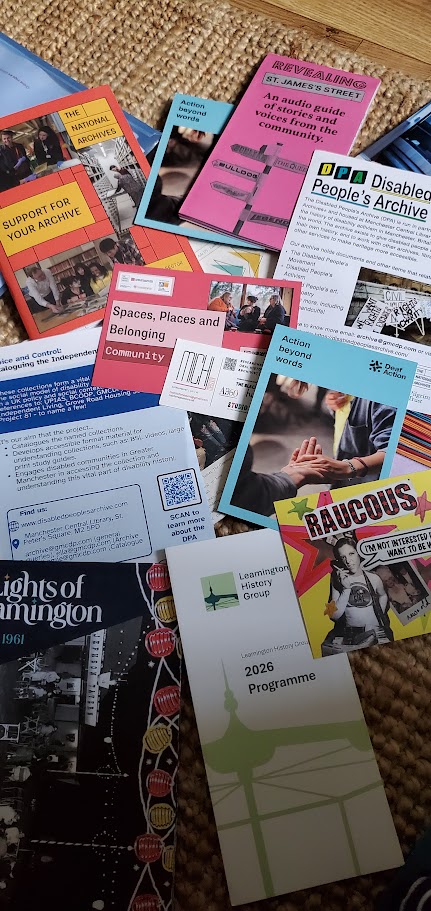
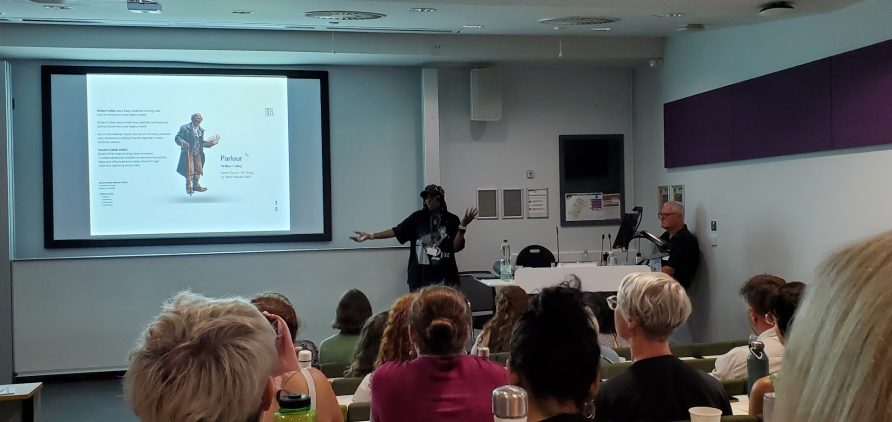
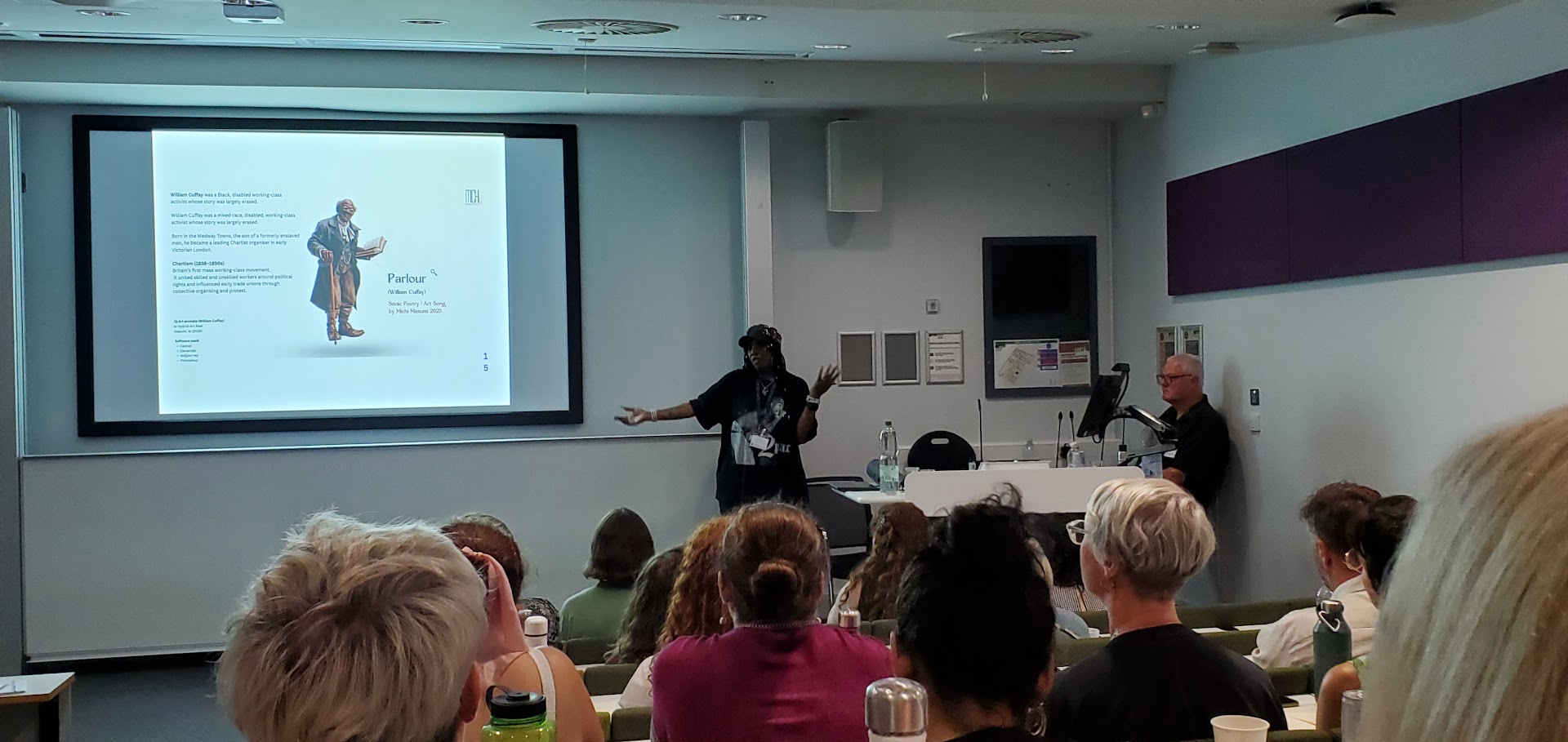
Sally Lewis and Gauri Raje received a travel bursary to attend the 2026 CAHG conference. As part of the travel bursary scheme, they wrote these short pieces and shared a few photos from the day. We hope their experiences will encourage others to apply for a travel bursary to attend next year's conference.
Sally Lewis
I attended the conference for the first time on behalf of Active Inclusion: Equity in Employment, a disabled-led organisation based in South London.
We are challenging barriers to disabled employment by supporting personal growth, organisational and systemic change. We have recently launched our website What's a 'Happy' Workplace? – Exploring #WaysOfWorking to help us all break barriers to employment which includes some #StoriesOfWork which will form a basis for our future archive. We will also be doing historical research to create a timeline of disabled people’s experience.
The conference was invaluable as a networking exercise linking us to those using similar methodology, exploring similar subject and geographical areas.
Experience shared will help us as we grow, with a feeling of solidarity with the sector. The expertise on show will also provide us with ideas for discussion and link us to different ideas, people and organisations to connect to as we develop our #WaysOfWorking.
Thank you to CAHG and their supporters for the opportunity.
Gauri Raje (Scotland)
The CAHG 2026 conference held at UCL, London focused on its theme ‘Preserving Community Memories through the Use of Audio and Film’. Receiving a bursary award from CAHG Scotland made it possible for me to travel from Helensburgh (northwest of Scotland) to London for the 8th July.
I am a trained historian specialising in oral history and narrative studies with a PhD from University of Warwick, UK. My PhD thesis focused on the memories of hunger & displacement over 3 generations of a tribal community in western India. After a postdoctoral project at the History of Medicine, and teaching at the department of Sociology & the Dept of History at the University of Warwick, I left the academia to work as a storyteller and community work.
Since 2018, I relocated to Scotland initially working on a Heritage Lottery-funded biographical life story project among the South Asian diaspora in Glasgow with a radio station in Glasgow. It resulted in a book ‘Making Lives, Making Community’ & an exhibition at the Scottish Parliament, Edinburgh. Grant awards from the People’s Parish Project (TRACS) and the University of Strathclyde made possible another oral history project among women of the South Asian diaspora in Glasgow and a book ‘Cooking Tales’, which was awarded the Spirit of Scotland award in 2024.
Recording memories of a Scottish village
Since the past 3 years, I have been working in the villages where I live (Cove & Kilcreggan). With my neighbour Ruth Wishart, we have been recording memories of the residents of our villages who have lived through the more recent historical events of the nuclear naval base coming up at Faslane & Coulport. Some of them also have generational stories of their elders settling on the peninsula. We have been able to create a small audio archive in our community library of the history of our peninsula. The work continues and I hope to get a grant to run oral history trainings for the younger generation on the peninsula to interview their family members and build up an archive of the everyday history of life on our peninsula.
A day of learning and revelation
Given my background and interests, the conference was a day of learning and revelation. Through attending I got to know that what we were doing on the Rosneath peninsula was not an oddity, but that there was a national movement on gathering and preserving everyday histories throughout the UK! It was also wonderful to connect with Audrey Wilson and know about the work of CAHG in Scotland.
The keynote address by Judith Garfield was especially inspiring in learning about starting from small beginnings and the various directions community archiving can move towards. The organisation of community panels to decide on themes that need to be taken up for recording by archivists - decided by a panel of community members - is an especially inspiring idea, and one that I will seriously consider in our archiving work in the villages.
A call to sensitivity
I was especially interested Tomas Gerrard & Carrie Skinner’s presentation on ‘Preserving the Deaf Heritage in BSL’. Their links with the Scottish Storytelling Centre, which I am part of, were especially interesting. The presentation also brought up a new dimension of how ‘oralism’ and ‘oral’ are the same word in BSL, the former evoking memories of the history of suppression of BSL language and modes of communicating. It was a call to sensitivity to different modes of communicating and remembering histories. ‘Reawakening the lights of Leamington through oral history’ was a reminder of the fundamental element of oral history, which is to build relationships of respect & trust. This allows the story not to be a product and to place the carriers of the those memories at the heart of any community archive.
The heart always takes centre stage
This reminder was carried through in Michi Masumi’s evocative presentation on Anthro- Digital narratives. In the age of AI, she made a crystal distinction between AI as assistant and what collaborating with AI involves in creative practice. Although this is not the direction our archiving work in the villages is heading, it was a realisation that many more possibilities open up with AI involves making memories evocative and in involving the younger generations in archival work - that it need not be limited to ‘dusty old books’. More importantly, that even with AI - knowledgeable used - the heart always take centre stage in memory and archival work.
I was glad to have attended the conference and thank CAHG Scotland, without whose bursary, this trip would have been difficult. I look forward to keeping in touch with the work of CAHG.